


Rubber Machine
What is Rubber Machine
A rubber machine is a machine used for processing rubber materials into different forms such as sheets, rolls, and pellets. Rubber processing involves various operations such as mixing, grinding, extrusion, molding, and curing. Rubber machines are used in industries such as automotive, construction, medical equipment, and agriculture. Some common types of rubber machines include rubber mixing mills, rubber extruders, rubber injection molding machines, calenders, and rubber vulcanizers.


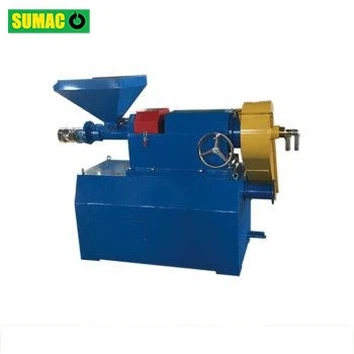


advantages of Rubber Machine
Enhanced Mechanical Properties
The primary benefit of using a rubber vulcanizing press is the significant improvement in the mechanical properties of rubber materials. Vulcanization enhances the rubber's strength, elasticity, hardness, and durability, making it suitable for a wide range of applications.
Increased efficiency
With rubber machinery, you can achieve high levels of efficiency that cannot be reached through manual labor. This is because the machines are designed to carry out repetitive tasks faster and with precision.
Consistent quality
Rubber machines are programmed to execute tasks accurately and consistently. Consequently, you can rely on the machines to produce reliable and uniform products that meet the required industry standards.
Reduced labor cosOnce you invest in a rubber machine, you can reduce your labor costs because the machines can perform tasks that would have required several workers to accomplish.
Flexibility
Rubber machines are designed to be flexible, meaning they can perform different tasks with ease. This feature is useful if your business has several products that require different processing methods.
nvironmentally friendly
Many rubber machines are designed to be eco-friendly. They use energy-efficient motors and recycled materials, making them perfect for businesses that are keen on reducing their.
carbon footprint
Cost savings: Investing in a rubber machine can prove to be a cost-effective option in the long-term. Rubber machines are durable, and with proper maintenance, they can last for several years without requiring significant repairs.
Material of Rubber Machine

Stainless Steel
This is a common material used for making components that come into direct contact with the rubber. It is highly resistant to corrosion and ensures the end product is clean and safe for use.

Cast Iron
This material is used for heavy-duty components of rubber machines like the base or frame of the machine. Cast iron helps in keeping the machine stable, reducing vibration and ensuring longevity.

Aluminum
This material is used mainly for lightweight components such as the adjustable parts of the machine.

Plastic
Some rubber machine components are made of plastic material, particularly for non-critical and low-pressure applications, as it is easy to mold and has excellent chemical resistance.

Brass
This is used for fittings and valves in rubber machines and helps in preventing corrosion that can be caused by harsh chemical environments.

Rubber
Some internal components of rubber machines can be made of rubber as it is excellent in resisting high pressures, impacts, and heat.
Application of Rubber Machine
Tire Manufacturing
The processing of rubber into tread, sidewalls, and other components for tire production is one of the primary uses of rubber machines. The machines used for tire production include rubber extruders, mixers, calenders, and curing presses.
Seals and Gaskets
The automotive, aerospace, and manufacturing industries use rubber parts such as seals and gaskets. Rubber machines such as injection molding machines and compression molding machines are used to create the desired shape and size of these products.
Conveyor Belts
Adopting advanced technology and concepts of the industrial internet, it helps manufacturing enterprises create a unified digital system covering the entire process of production and management.
Industrial Hoses
Rubber hoses are used in various industrial applications such as chemical transfer, water transfer, and oil transfer. Rubber hose manufacturing requires the use of extruders, calenders, and curing presses.
Rubber Flooring
The construction industry uses rubber flooring in various applications. Rubber machines such as mixers, calenders, and press machines are used to create rubber flooring tiles and mats.
Sporting Goods
Rubber machines are used to manufacture sporting goods such as tennis balls, golf balls, and hockey pucks. The production process involves mixing the rubber compounds, shaping the products through compression or injection molding, and then curing them.
Types of Rubber Machine

Rubber Dispersion Kneaders
These machines are used to mix and disperse raw materials, additives, and fillers to create a homogeneous rubber compound.

Rubber mixing mills
These machines are used to mix, sheet, and refine rubber compounds. They can be equipped with a variety of features, such as automatic temperature and speed control, to ensure consistent quality.
Rubber extruders
These machines are used to extrude rubber compounds into various shapes and sizes, such as tubes, profiles, and gaskets.

Rubber vulcanizing presses
These machines are used to cure rubber products, using heat and pressure to transform raw rubber compounds into finished products.
Components of Rubber Machine
An extruder is a machine used to convert solid rubber into a liquid form. It involves pushing the rubber through a heated cylinder with the help of a screw. The extruder plays a critical role in producing high-quality rubber products with consistent properties.
Mills are machines used to mix and compound rubber materials. They are typically composed of two rollers that rotate in opposite directions, thus recovering the rubber to the specified thickness and quality.
Calenders are machines that are used to process rubber sheets. They involve passing the rubber through a series of rollers that compress it to a uniform thickness. Calenders are very important in making high-quality rubber products that require consistency and uniformity.
Vulcanizers are specialized machines that are used to cure or vulcanize rubber products. They involve heating the rubber item to a specific temperature and pressure, which causes it to cross-link and form the final product.
Architectural design & planning cepteur sint occaecat cupidatat proident, taken possession of my entire soul, like these sweet mornings of spring which I enjoy with my whole...Architectural design & planning cepteur sint occaecat cupidatat proident, taken possession od my entire soul, like these sweet mornings of spring which I enjoy with my whole Lorem ipsum dolor sit ament, consectetur adipisicing elit,sed do eiusmod tempor incididunt labore et dolore magna aliqua. it enim ad minim veniam.
Compression molding machines use a similar process as injection molding machines. They involve compressing solid rubber into a mold and heating it to a specific temperature. Compression molding is commonly used to produce rubber parts and products with simple geometries.
Why choose us
Professional Team
We strive to meet your recycling needs by offering a full line of products. Our commitment to each customer is friendly and knowledgeable service. Our team understands your needs through years of experience in the recycling industry.
Best After Service
Provide professional installation and training. Detailed operation manual and video for customer installation.
Customer-Centric
Our customer-centric approach to customization goes beyond the technical aspects of the equipment. We also provide comprehensive training and support to ensure that your team can operate the equipment effectively and safely. Our commitment to customer satisfaction extends from the initial consultation to installation and ongoing service.
Rich Experience
ELV Recycling Equipment has a team of experienced professionals who have a deep understanding of the automotive recycling industry and can provide expert advice and guidance.
What is the manufacturing process of rubber?
Some of the most common rubber manufacturing processes are extrusion, latex dipping, molding, and calendering. Extrusion begins with an unvulcanized compound being fed into an extruder. Once it's inside the extruder, it gets carried forward to a dye, which is a specialized manufacturing tool used to shape the rubber.
How Long Does It Take to Install a Rubber Track
The time it takes to install a rubber track can vary depending on several factors, including the size and type of equipment, the experience of the installer, and any specific challenges or complications that may arise during the installation process.
The installation of a rubber track can take anywhere from 30 minutes to a few hours. This includes the time required to remove the old track (if applicable), clean the undercarriage, and properly install the new rubber track.
The process typically involves lifting the machine, removing any necessary components or guards, aligning the track with the sprocket and idler, and securing it in place. It is important to follow the manufacturer's instructions and guidelines for proper installation to ensure the track is installed correctly and securely.
What Is the Difference Between Rubber Mixing Mills and Rubber Extruders
Function
Rubber mixing mills are primarily used for mixing and blending rubber compounds. They are designed to process raw rubber materials and additives to achieve a homogeneous mixture. Rubber extruders, on the other hand, are used for shaping and forming rubber compounds into specific profiles or shapes. They extrude the rubber material through a die to create continuous lengths of rubber with a specific cross-sectional shape.
Operation
Rubber mixing mills operate by two counter-rotating rolls that mix and blend the rubber compound. The rolls can be either open or closed, depending on the specific application. The rubber compound is fed into the nip between the rolls, and the rolls rotate to mix and knead the material. Rubber extruders, on the other hand, use a screw mechanism to push the rubber compound through a die. The screw rotates and applies pressure to force the material through the die, shaping it into the desired form.
Product Output
Rubber mixing mills produce a mixed rubber compound that can be further processed or used directly in various applications. The mixing process helps distribute additives and improve the physical properties of the rubber compound. Rubber extruders, on the other hand, produce continuous lengths of rubber with a specific cross-sectional shape. These extruded rubber profiles can be used in applications such as seals, gaskets, hoses, and profiles for various industries.
Equipment Design
Rubber mixing mills typically consist of two rolls that are horizontally mounted and driven by a motor. The rolls can be heated or cooled to control the temperature of the rubber compound during mixing. Rubber extruders, on the other hand, consist of a screw mechanism enclosed in a barrel. The screw is driven by a motor and rotates within the barrel to push the rubber compound through the die.
Applications
Rubber mixing mills are commonly used in the rubber industry for various applications, including tire manufacturing, rubber sheet production, and rubber compounding. Rubber extruders are used for applications that require continuous lengths of rubber with specific shapes, such as automotive seals, window gaskets, and rubber profiles for construction and industrial applications.
What Are the Safety Precautions When Using Rubber Machines
Some safety precautions when using rubber machines include wearing proper protective equipment, such as gloves, eye protection, and hearing protection; following machine-specific safety guidelines; and ensuring that the machine is properly maintained and inspected regularly.
Our Factory

Sumac was established in 2011, specialized in tire rubber recycling and metal recycling industries. In 2015, SUMAC cooperated with ARS (Australia) to design and manufacture ELV recycling and dismantling equipments. We are committed to solving global recycling problem of end-of –life vehicles and will become the world leader in ELV recycling industries.

FAQ
Q: What machine is used to make rubber?
Q: What machine is used in the rubber industry?
Q: What is the manufacturing process of rubber?
Q: How do you manufacture rubber?
Q: What causes rubber tracks to break?
Q: How long does it take to install a rubber track?
Q: How tight should rubber tracks be?
Q: Does humidity affect rubber?
Q: What is a rubber machine?
Q: What are the common types of rubber machines?
Q: What is an internal mixer?
Q: What is an open mill?
Q: What is a rubber extruder?
Q: What is compression molding?
Q: What is injection molding?
Q: What is transfer molding?
Q: What are the safety precautions to take when operating a rubber machine?
Q: What are the safety precautions when using rubber machines?
Q: What is a rubber press used for?
Q: What is the difference between rubber mixing mills and rubber extruders?
SUMAC Auto Recycling Equipment Co.,Ltd is one of the leading rubber machine manufacturers and suppliers in China. We warmly welcome you to wholesale quality rubber machine made in China here from our factory. For price consultation, contact us.
Tyre Rubber Recycle Crusher Machine, Tyre Rubber Recycling Crusher, Used Rubber Moulding Tile Making Machine